A sales document you can play.
Beat the Hacker is an AI risk awareness game from Doubleflow. Instead of describing the game, we designed a concept that lets people play a real level 1 challenge before they book a demo.
In short
The Beat the Hacker taster is a LiveDeck design concept for Doubleflow, the makers of an AI risk awareness game for employees. Seven screens take people from a mission briefing to an interactive route through five AI risks, a playable challenge with a countdown and three ways to roll the game out. It ends with a prompt to book a 15 minute demo.
- Client
- Doubleflow
- Document
- Product taster and sales deck
- Status
- A design concept
- Built for
- Training and security teams
The brief
Beat the Hacker is about doing, not reading. A PDF or a slide deck could only describe it, and the people who buy it, training and security leads, see a lot of product decks.
We wanted the document to feel like the game itself: a little tension, something to solve and a clear reason to book a demo.
Show the game by letting people play it.
A mission briefing
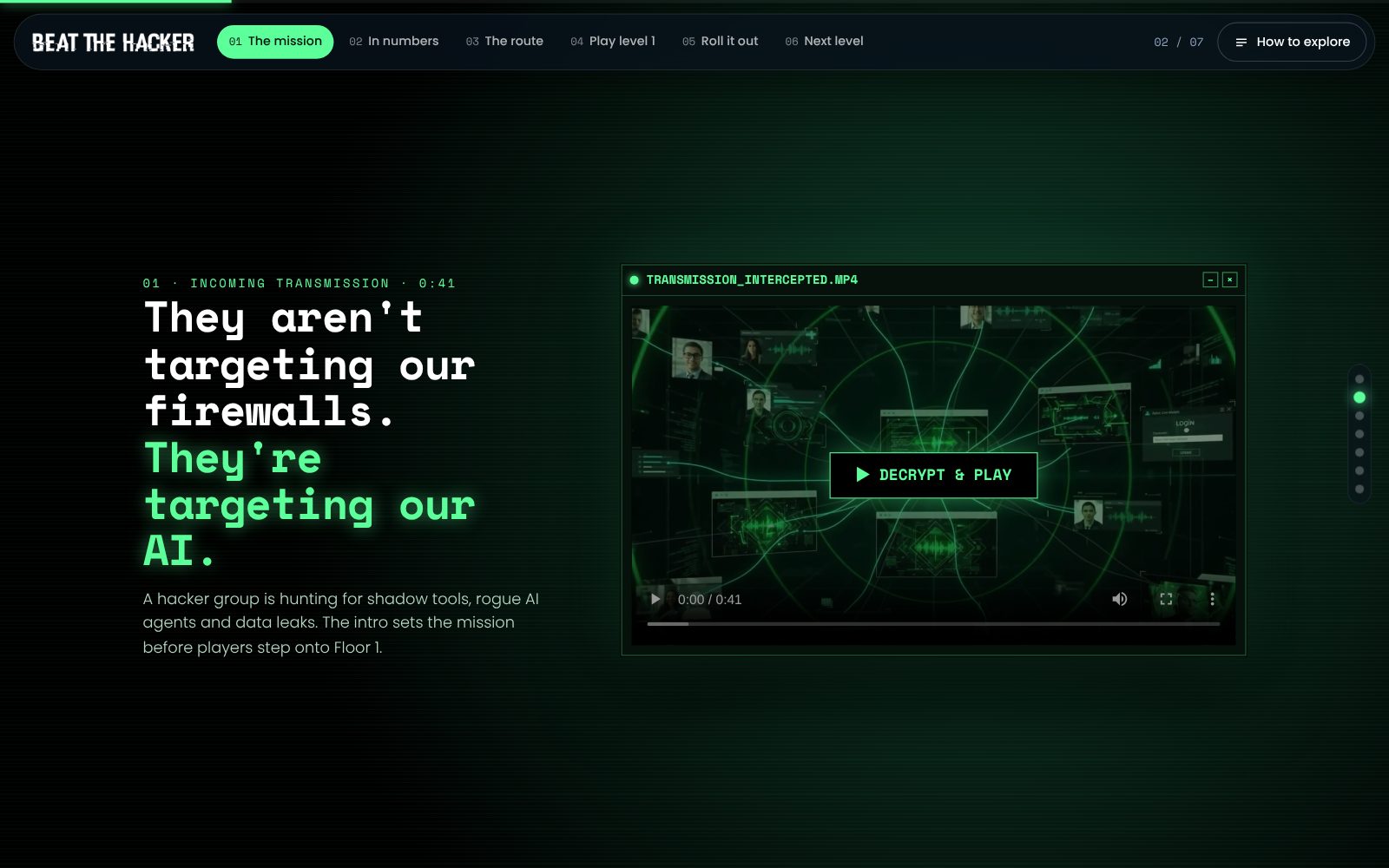
It opens like an intercepted transmission, with a 41 second intro that sets the scene before anyone reads a word.
One route, five AI risks
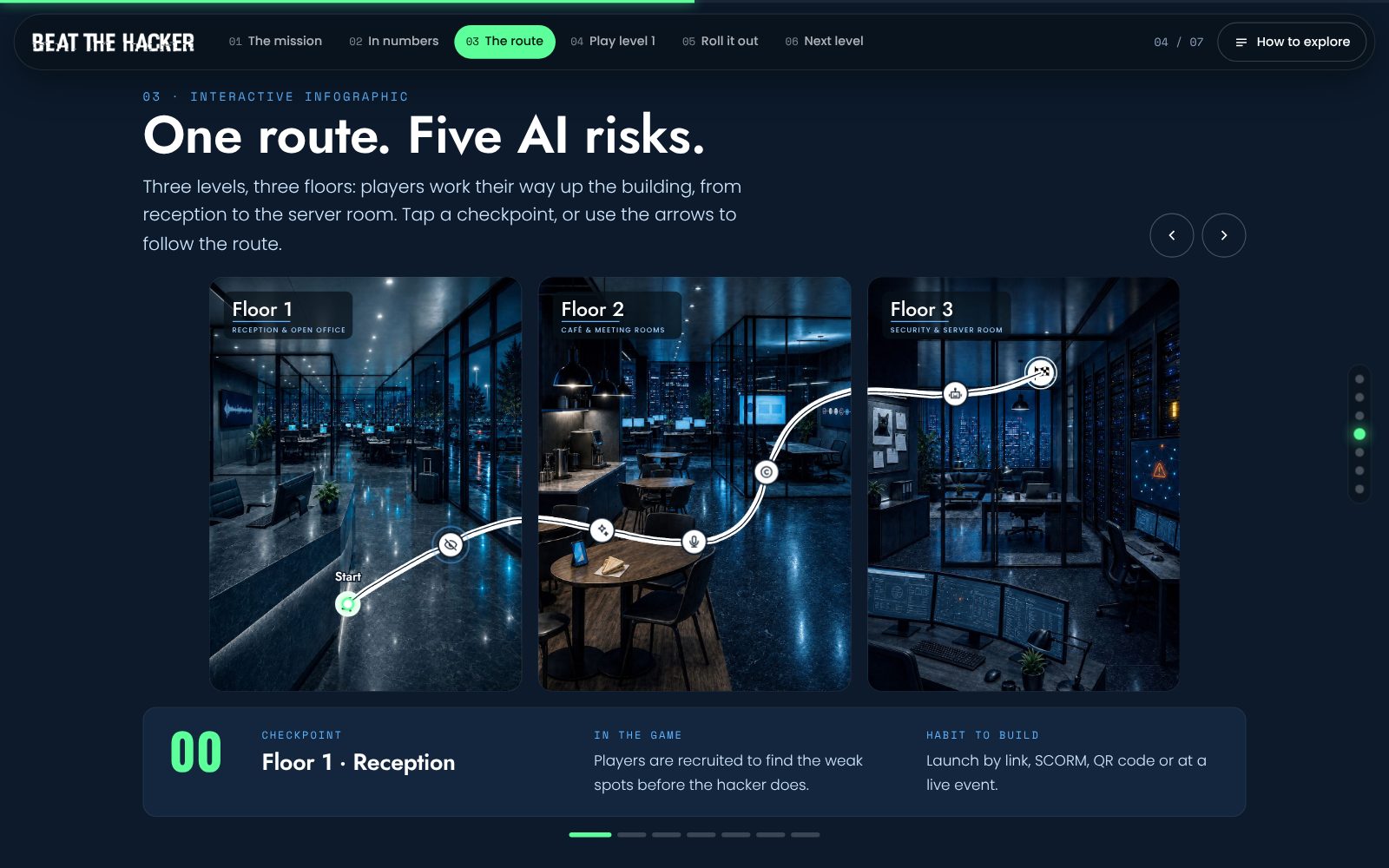
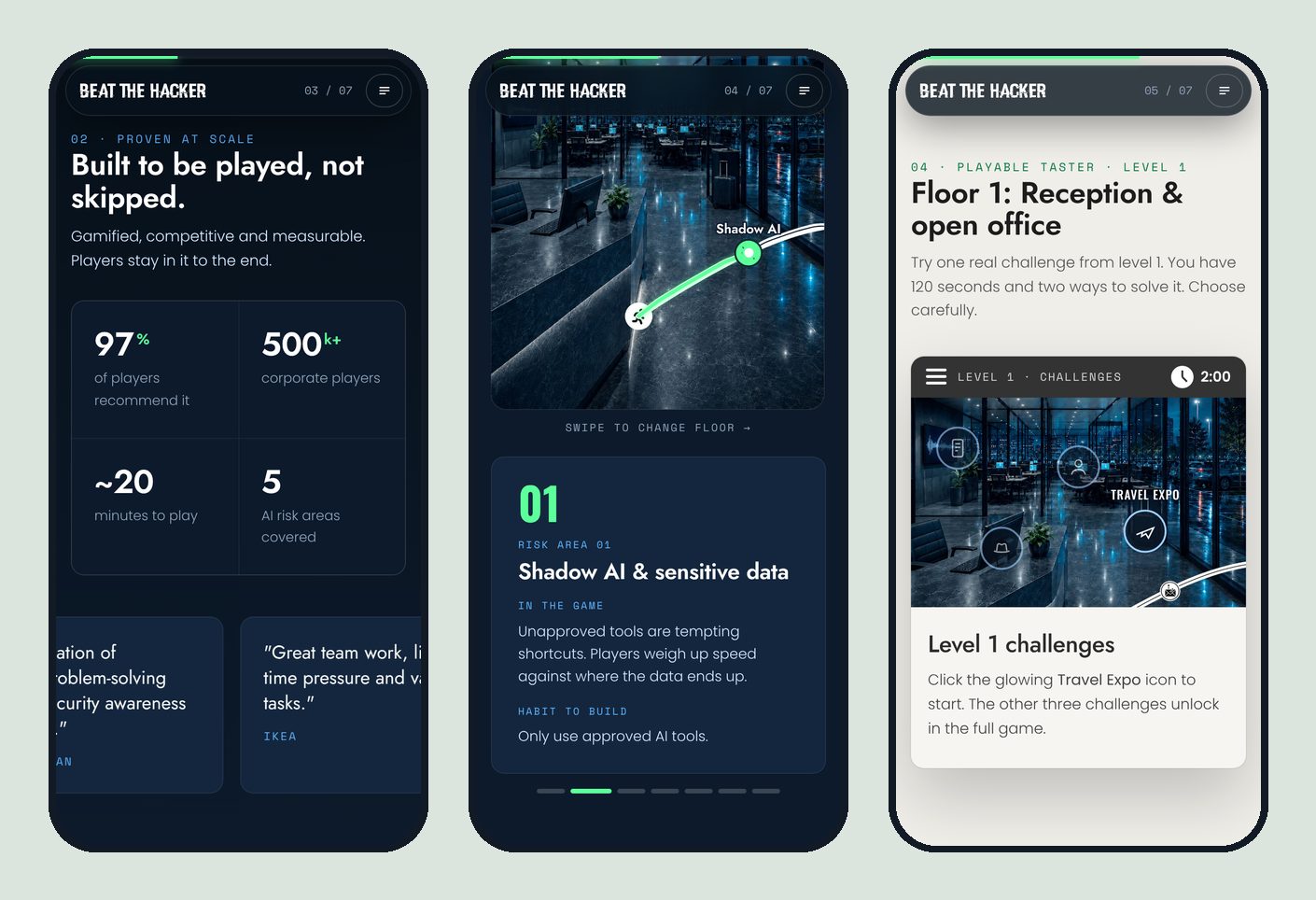
An interactive infographic follows the route up the building. Tap each checkpoint to see the risk, what happens in the game and the habit it builds.
A real challenge to play
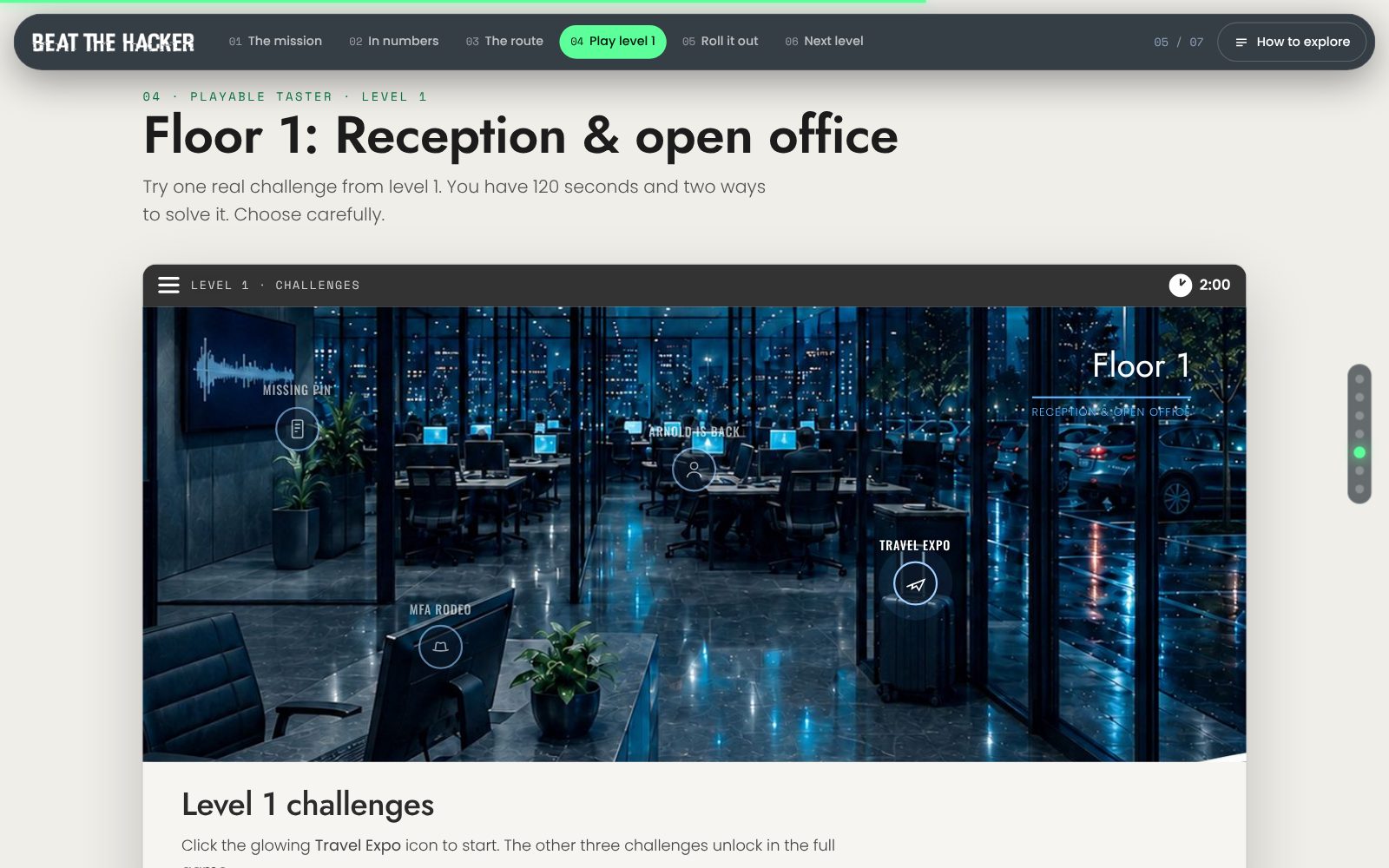
People get 120 seconds to crack a hidden code, either with their own brain or with a tempting AI shortcut, and then see what that choice cost them.
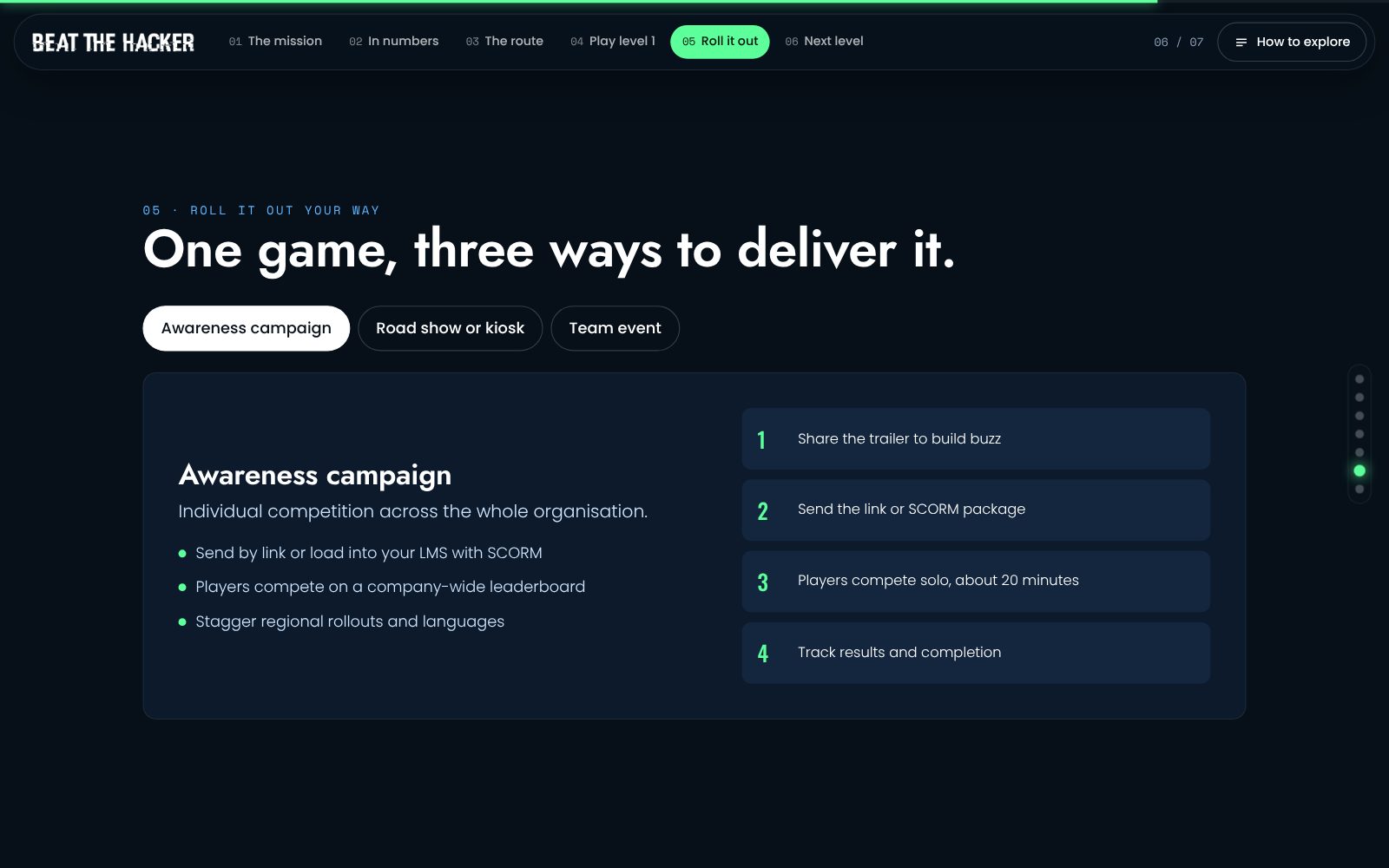
Three ways to roll it out
Switch between an awareness campaign, a road show and a team event to see how each one works, step by step.
Also inside
- Count-up figures from real players
- A spot the detail bonus round
- Chapters along the top and dots down the side
- A guide to the things worth trying
Playable on a phone too.
The game runs on laptops and smartphones, so the taster does too. Every screen is built for touch, from the route to the countdown.
This is a design concept we made for Doubleflow, to show how a product can sell itself through a LiveDeck. It is the most interactive one we have built: part document, part game.
How interactive can a LiveDeck be?
Very. This one has a video intro, an interactive route, a timed challenge and a bonus round. Most LiveDecks are simpler, and we suggest what suits your content.
Can a LiveDeck include video?
Yes. Video, animation and sound can all be part of a LiveDeck, and they still work on a phone.
Does this work for selling a product?
Yes. Letting people try something before they book a call is one of the strongest things a sales document can do.
Let's bring your next document to life.
Tell us about your document and we will come back to you with ideas and a price.